
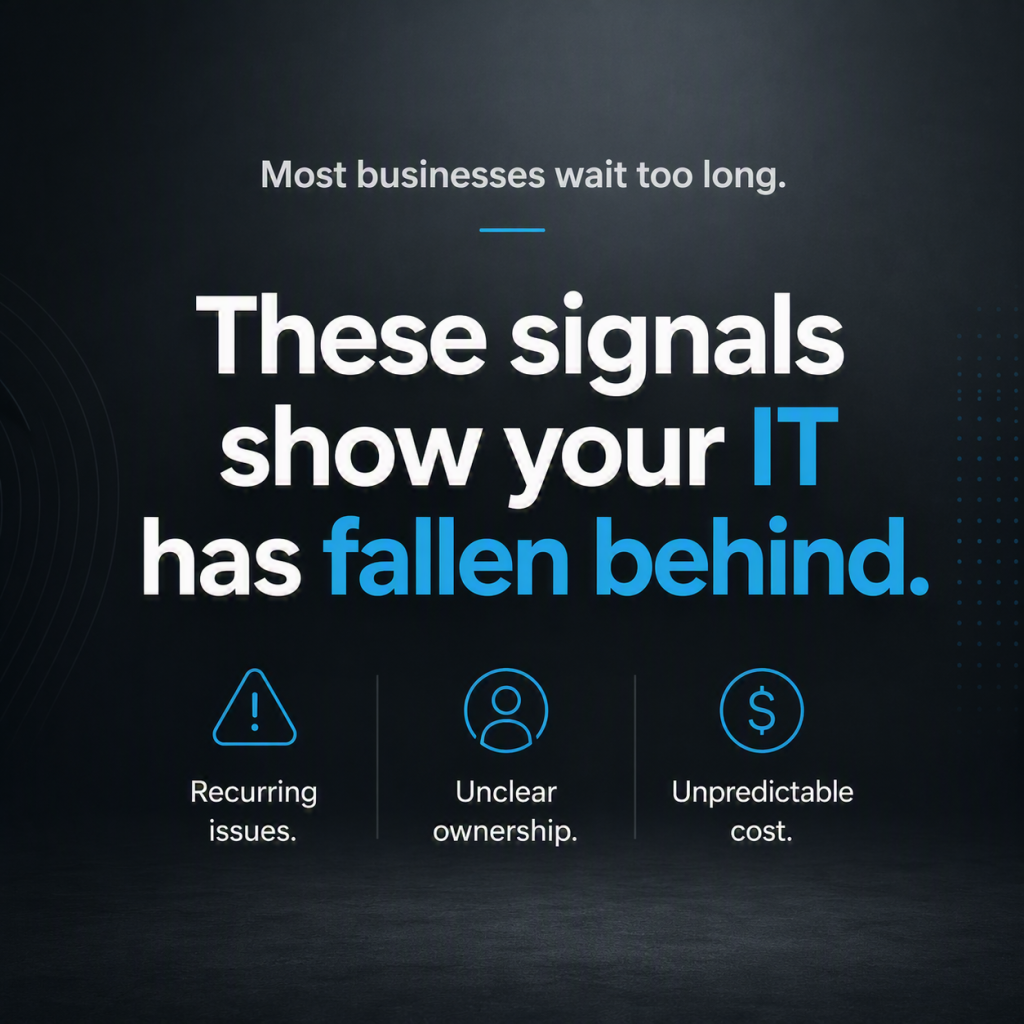
The Signals Are Usually Clear
Most organizations do not change their IT approach overnight. Instead, the pressure builds gradually as systems lose alignment with how the business actually operates.
At first, systems stop working together effectively. As a result, teams begin working around limitations instead of relying on them. Issues repeat instead of resolving.
Downtime becomes more visible.
Meanwhile, costs become harder to predict and justify.
At the same time, gaps begin to surface across the organization.
Field teams struggle with access, while office teams lose visibility. In parallel, leadership starts to question whether security and data protection actually hold up under pressure.
Importantly, these issues do not appear in isolation. They tend to compound, reinforcing each other and increasing operational friction.
At that point, the question shifts. It is no longer whether something needs to change. Instead, it becomes whether the current approach can support where the business is heading.
As the business grows, structural gaps become harder to ignore. If the IT environment does not evolve in step, it begins to slow momentum and limit performance.
Recognizing that shift early allows leadership to move away from reactive fixes and toward a more deliberate, structured strategy.