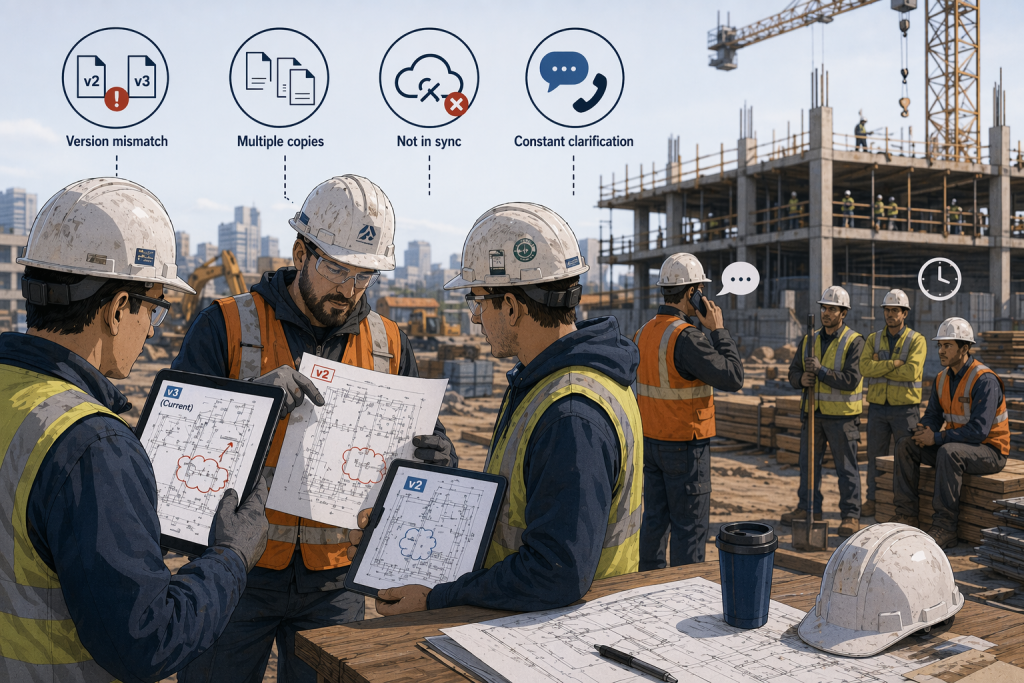
Construction workers comparing different versions of drawings on tablets and paper at a jobsite, showing version mismatch, confusion, and work delays due to lack of a single source of truth.

Most construction teams don’t think of document control as a major issue until something goes wrong. On a jobsite, working from the wrong drawings or outdated documents is not a small mistake. It leads to rework, slows decisions, and introduces unnecessary risk across multiple trades.


We have seen this directly with contractors where multiple versions of drawings were being shared through email, local folders, and project tools with no clear ownership. Field crews were working from downloaded copies, while the office had more recent updates. No one was fully confident which version was correct.


The impact showed up as repeated clarification calls, small rework tasks across trades, and project managers spending time validating information instead of progressing the job.


The issue was not the lack of documents. It was the lack of a trusted source of truth.


What improved was not adding another tool, but restructuring how documents were managed. We implemented a centralized document environment, defined ownership of updates, and controlled access so only current versions were in circulation. Field access was simplified to ensure teams were always working from the same set of files.

 

Once teams trusted the documents, coordination improved immediately. The reduction in rework and back-and-forth communication created a noticeable improvement in project flow.

Construction team reviewing up-to-date digital drawings together on a tablet at a jobsite, showing centralized documents, clear ownership, and smooth coordination.