
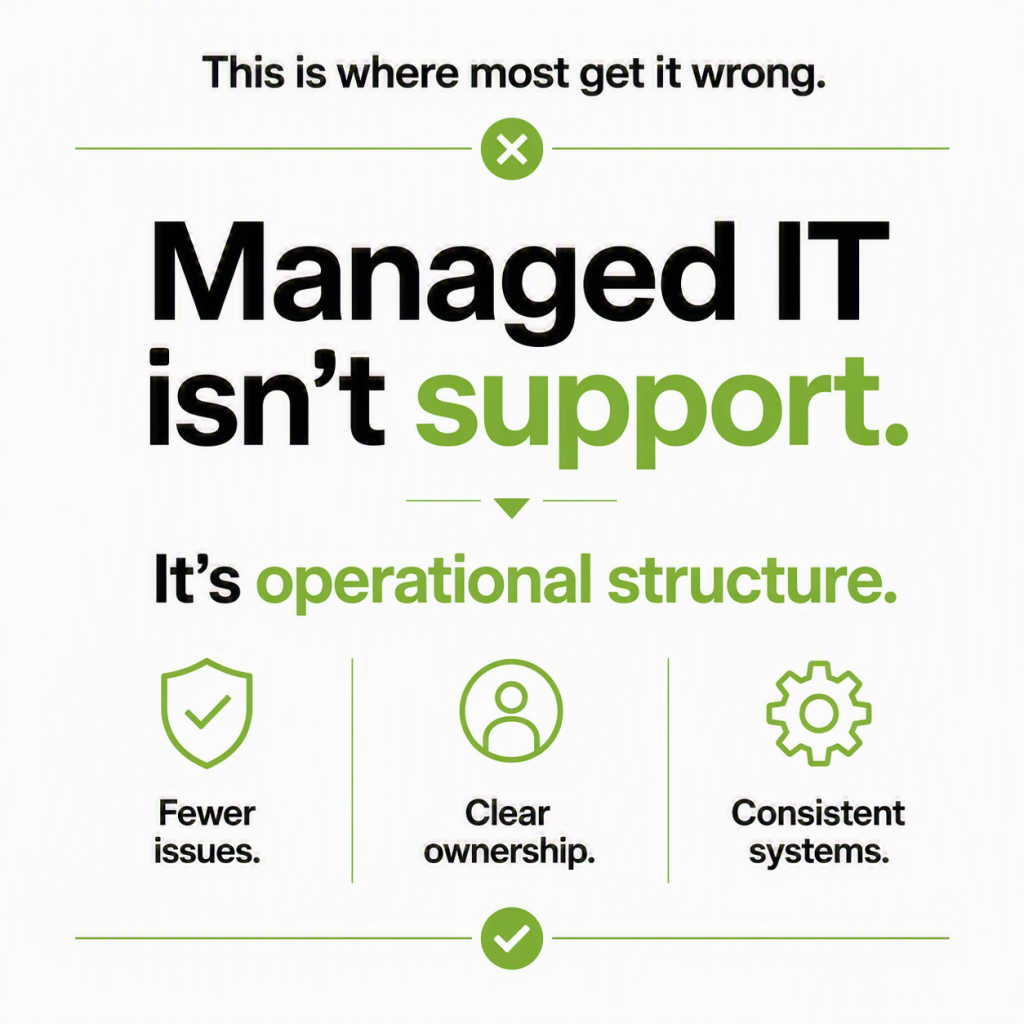
This Is Not About Support
Many organizations still associate Managed IT Services with helpdesk support. That definition no longer holds.
Instead, a modern MSP brings structure to how technology supports the business. As a result, the value does not come from reacting faster. It comes from reducing the need to react in the first place.
When IT is structured, the environment becomes consistent. Systems follow defined standards. Performance is actively monitored. Issues are addressed early, before they disrupt operations. Consequently, your team works in a stable environment instead of navigating constant variability.
At the same time, this structure introduces cost control. Rather than absorbing unpredictable IT expenses, you operate within a defined model. This makes planning easier, improves allocation decisions, and keeps investment aligned with business priorities.
Security also becomes more deliberate.
Access is managed intentionally, not informally.
Data protection follows a defined approach. Risk is monitored continuously, rather than reviewed after the fact. As a result, exposure decreases while confidence increases.
Most importantly, a strong MSP introduces strategic guidance. Many small and mid-sized organizations lack executive-level IT leadership. Without it, decisions tend to stay reactive and short-term.
A modern MSP closes that gap. It establishes a planning mindset, aligns technology decisions with business goals, and introduces accountability into how IT evolves over time.
Ultimately, this is the difference between managing IT and using IT to run the business effectively.
Next: Why Managed IT Services Matter by Industry
Last Weeks Insight: The Hidden Risks Of Reactive IT